Title
どんな綺麗な朝日より沈む夕日を僕は推す。
Sunset Over Sunrise
Logo
Brand
Canva
Category
Tutorial Drama Series
Year
2026
Overview
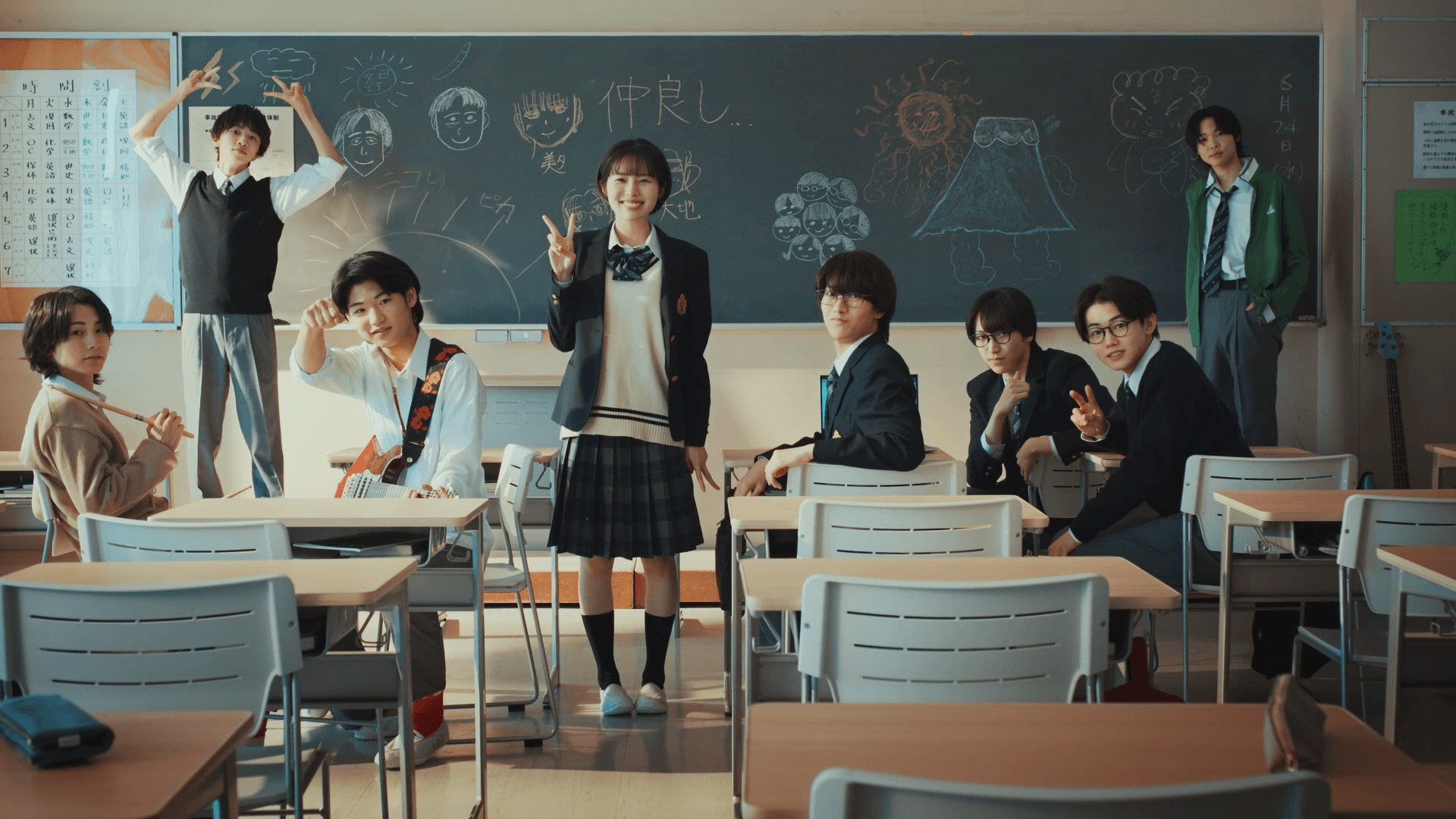
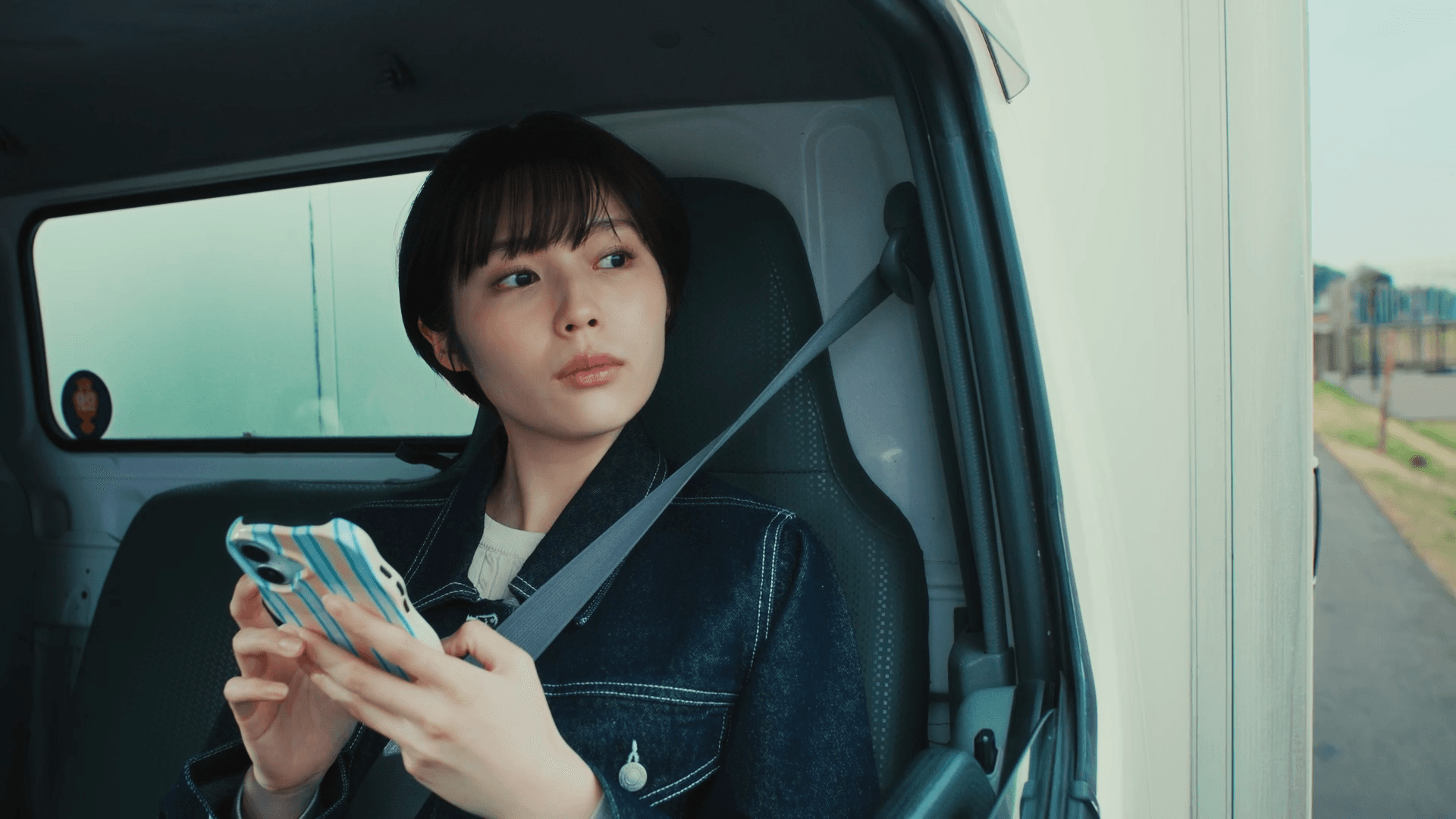
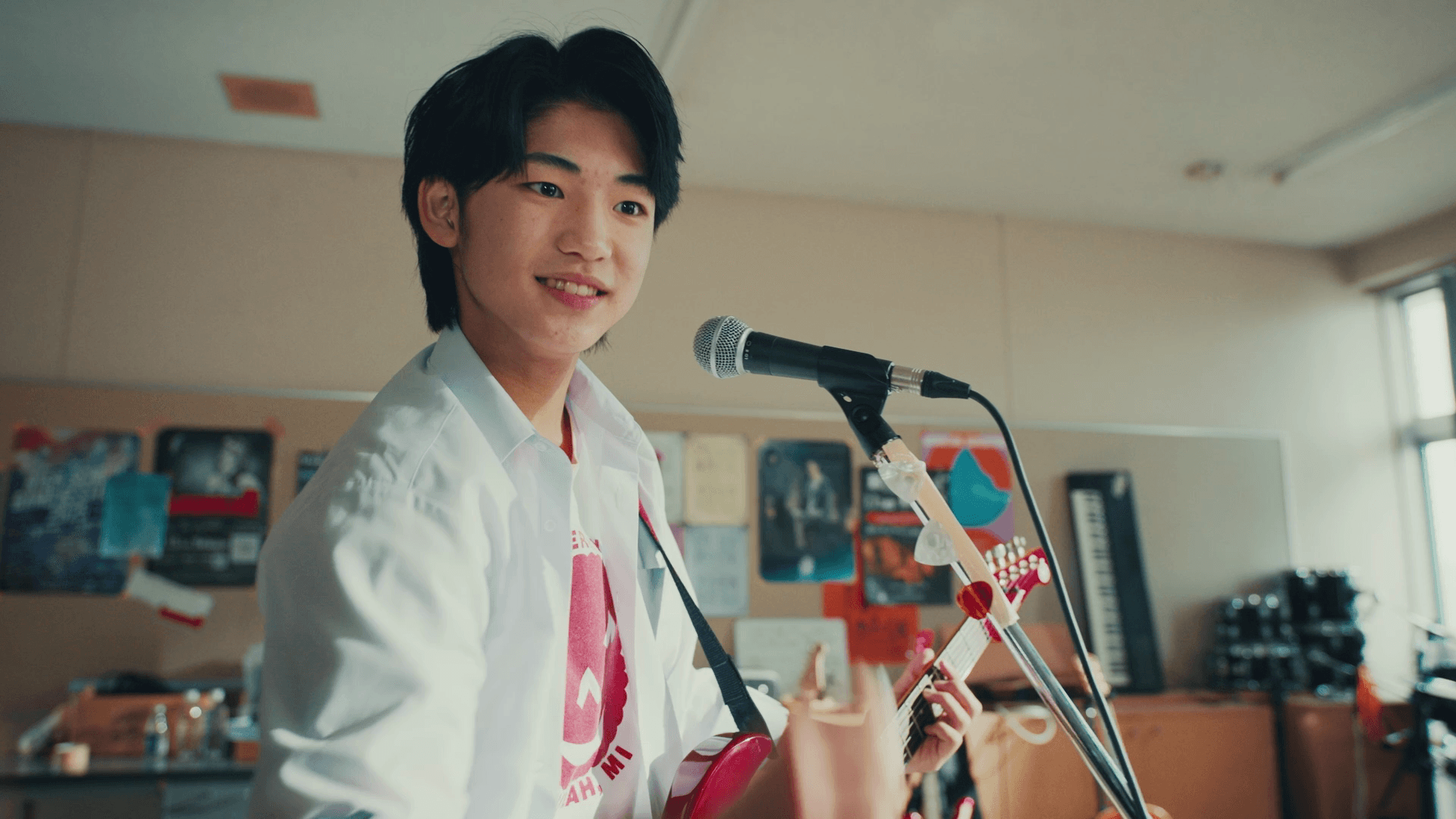
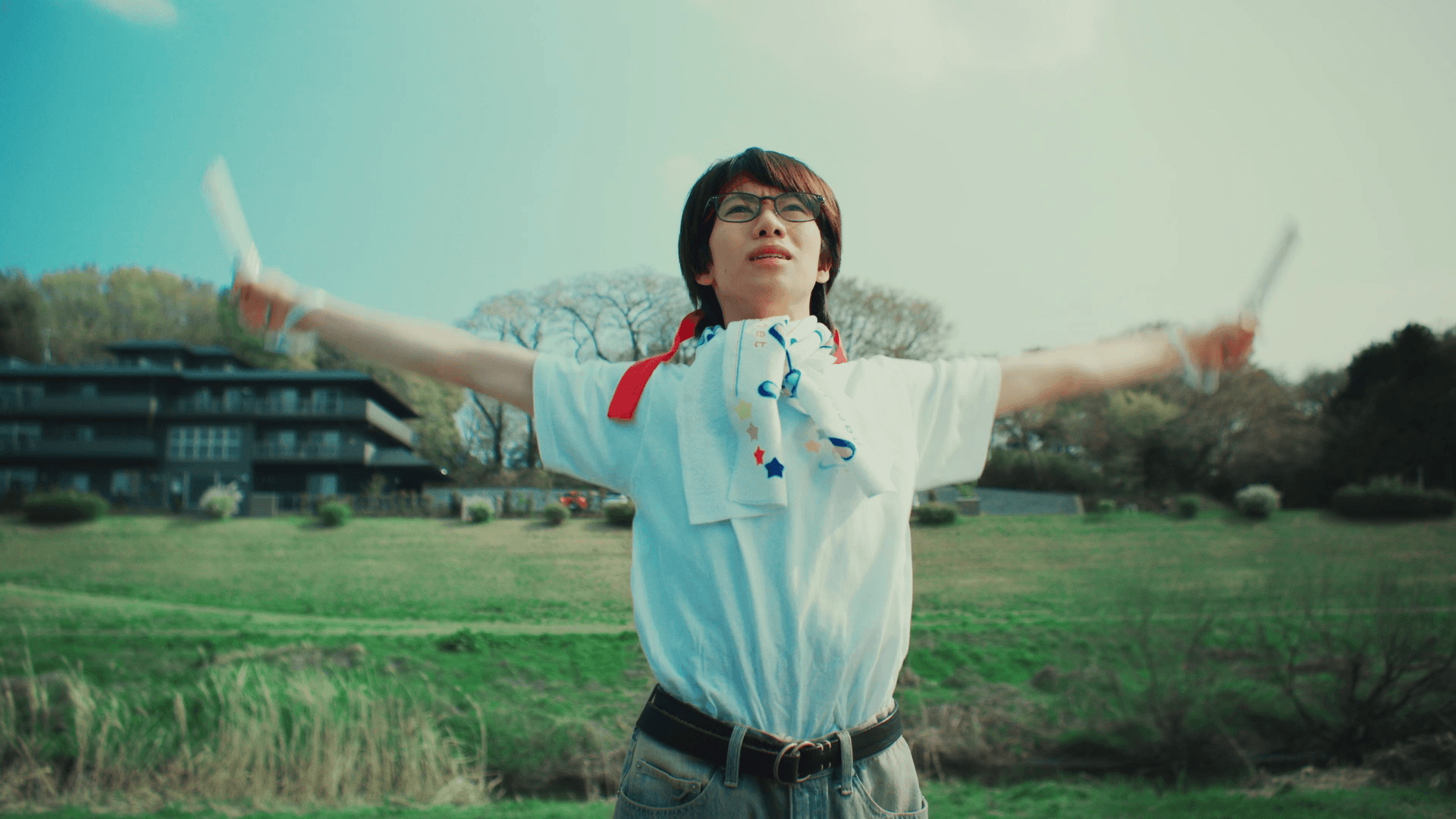
Sunset Over Sunrise is a six-episode original drama and the second installment in Canva's Tutorial Drama Series. The story follows Hayate Uchimura, an otaku high school student with a talent for digital creativity, and Miyu Umesaki, a former idol trainee who transfers to a new school while struggling to let go of her dream. As the two grow closer through creating with Canva, their journey gradually draws in their classmates, evolving into a coming-of-age ensemble drama about discovering one's future and finding a place to belong.
Project Story
After "Just Start Creating"
The first season premiered in October 2025, and to be honest, I started thinking about Season 2 almost immediately afterward.
The theme of the first season was simple: just start creating. Open your laptop or your phone, make something, and discover the joy of creating.
But if you keep designing, sooner or later you run into a different kind of obstacle.
"Is this actually good enough?"
You start comparing yourself to people who seem more talented. You lose confidence in your own work. It's something I've experienced countless times myself, and that's why I decided to make that feeling the central theme of Season 2.
Our protagonist, Hayate, isn't a beginner. He's already a dedicated Canva user—a passionate fan who naturally creates designs for the things he loves, organizes fan activities, and puts everything he has into supporting other people.
Then Miyu arrives as a transfer student.
She used to be an idol trainee.
Originally, I imagined the series as a coming-of-age story about fan culture. But as the story developed, I realized Hayate wasn't really supporting an idol anymore—he was supporting Miyu herself.
Believing in someone. Encouraging them. Telling them, over and over, "You'll be okay."
At some point I began to think that maybe that's what "oshi-katsu" really is.
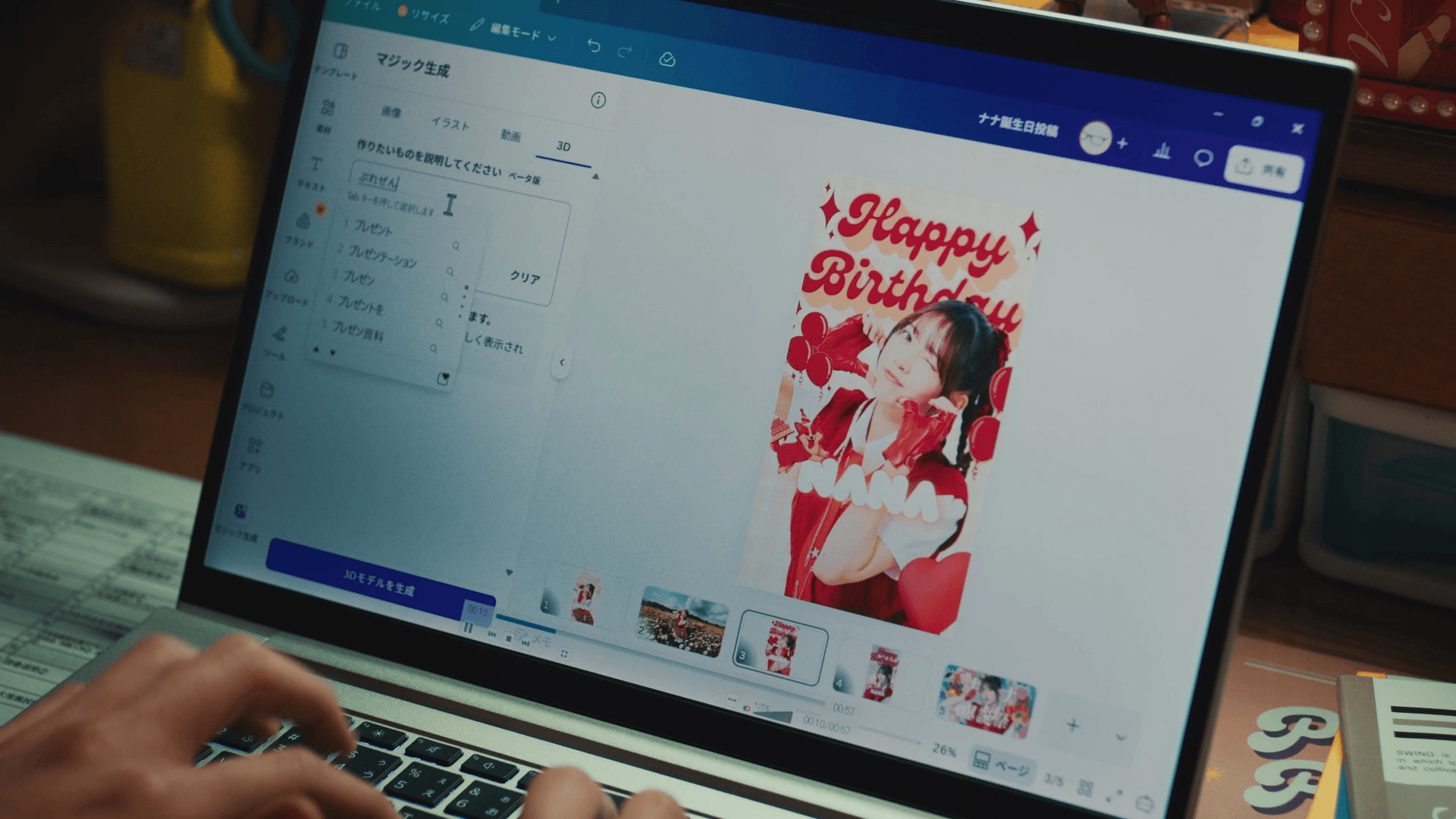
Just like the first season, I never wanted to change one core philosophy: the story itself should be the tutorial.
Most tutorial videos explain how a feature works.
"This button does this."
"This tool can do that."
But they often leave one important question unanswered:
"So... why would I actually use it?"
That's why every episode in this series has a problem to solve, a goal to achieve, and emotional conflict to overcome. Canva simply becomes the creative tool that helps the characters move forward. (In fact, even if Canva were to disappear someday, I wanted this series to leave viewers with something more meaningful than just learning how to use a design tool.)
I wanted it to be a tutorial where the viewer—not an instructor—is the protagonist.
Five Different Versions of Youth
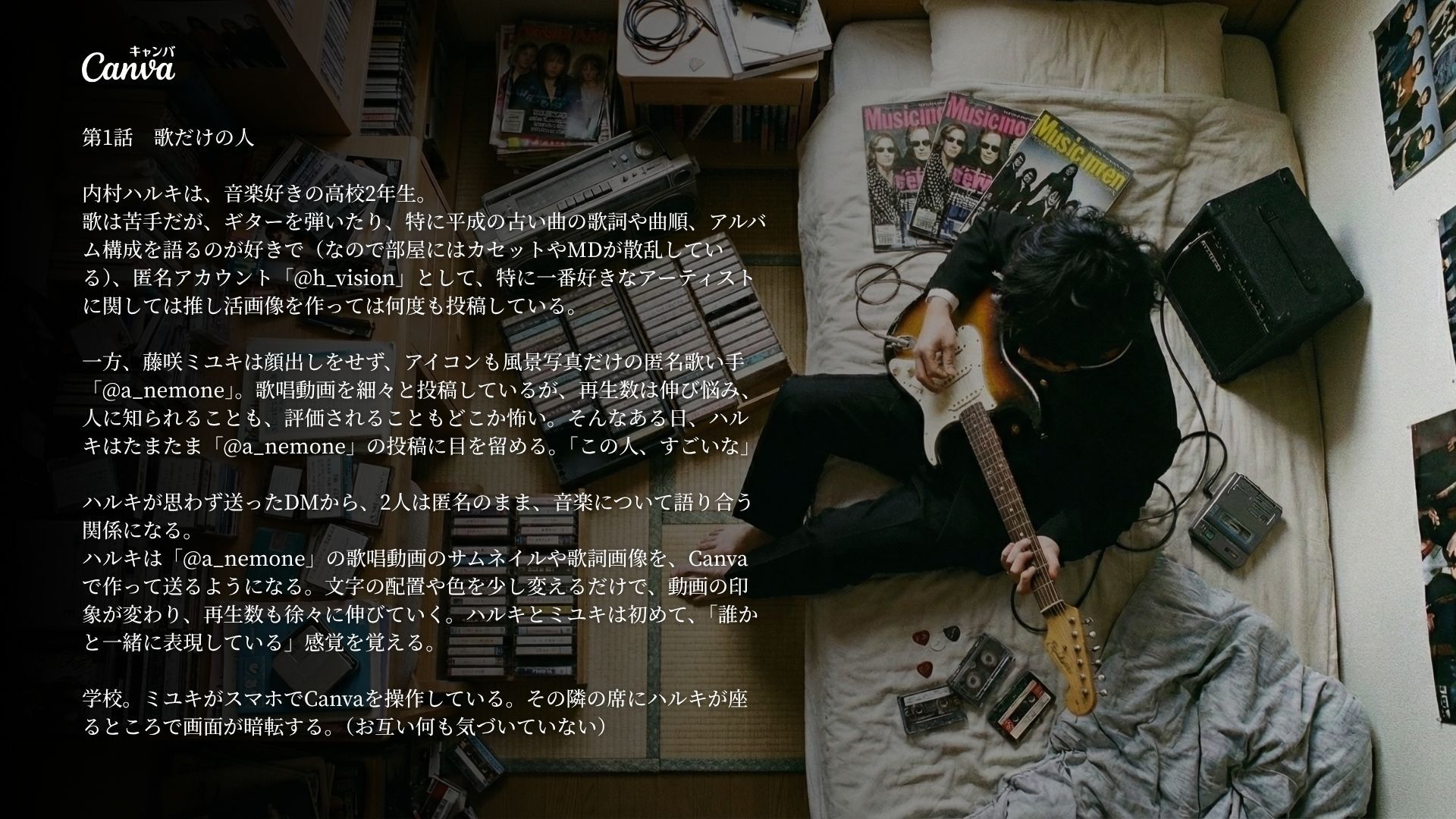
I wrote a detailed outline covering all six episodes before the screenplay was developed. I still remember how happy I was when director Yoshifumi Udo read the first draft and immediately said,
"This is fun."
Of course, the finished version changed quite a bit from that original outline.
In the earliest version, Miyu still dreamed of returning to the idol world, and the story ended with her becoming an idol again.
But Director Udo has a wonderful instinct for avoiding predictable endings. Time after time, he'd make choices that quietly steered the story away from the obvious. Looking back, I don't think I could have arrived at this version on my own.
The cultural festival finale probably went through five different versions.
I knew from the beginning that I didn't want Season 2 to exist in isolation. I wanted the characters from the first season to naturally join the story so everyone could work together on one shared creation. Making all of that fit into six episodes took a surprising amount of trial and error.
Even Hayate's confession changed several times.
One idea involved a giant fireworks mosaic. Miyu would receive a red transparent sheet, and when she held it over the artwork, certain colors would disappear, revealing a hidden confession that no one else could see.
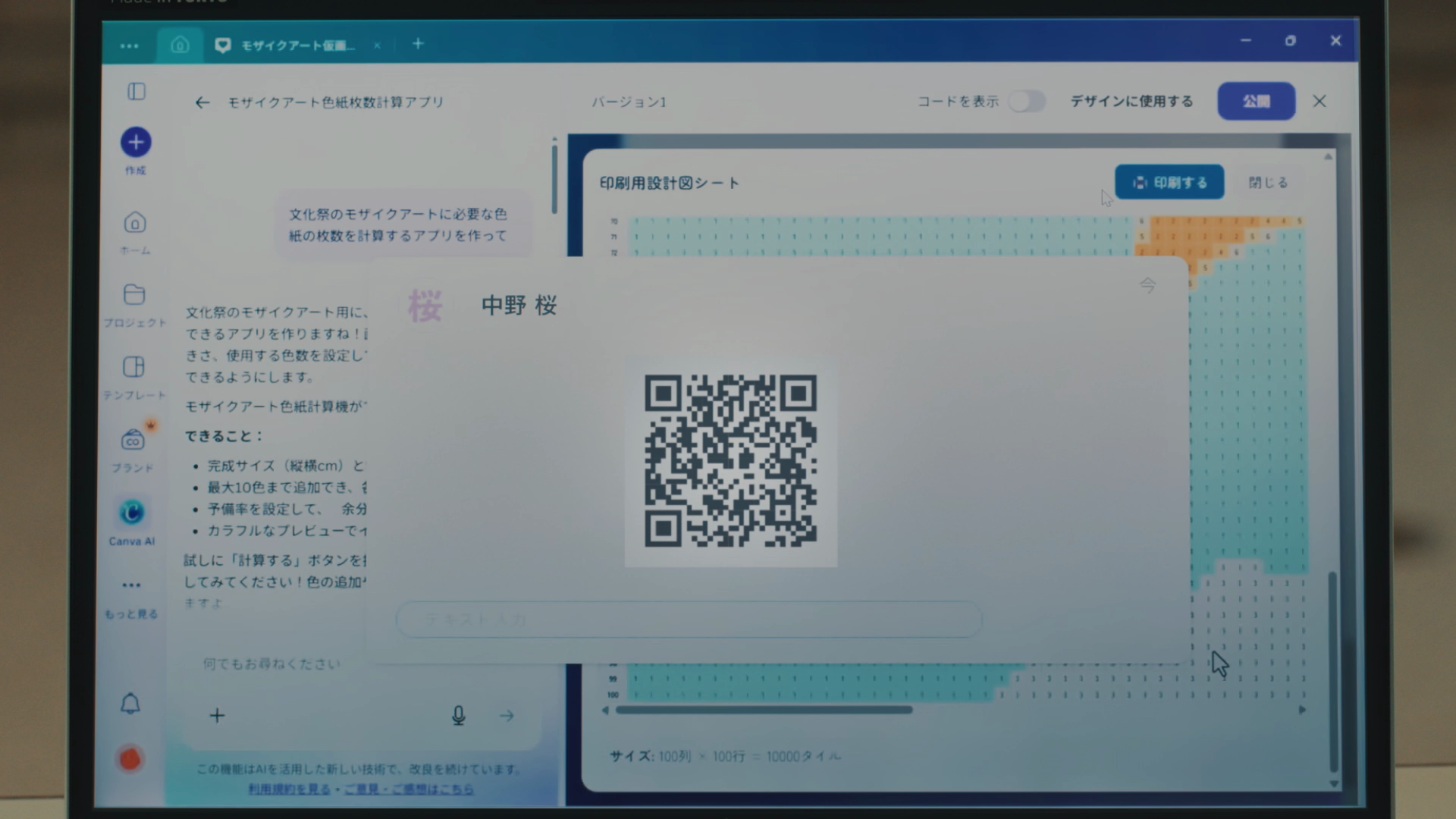
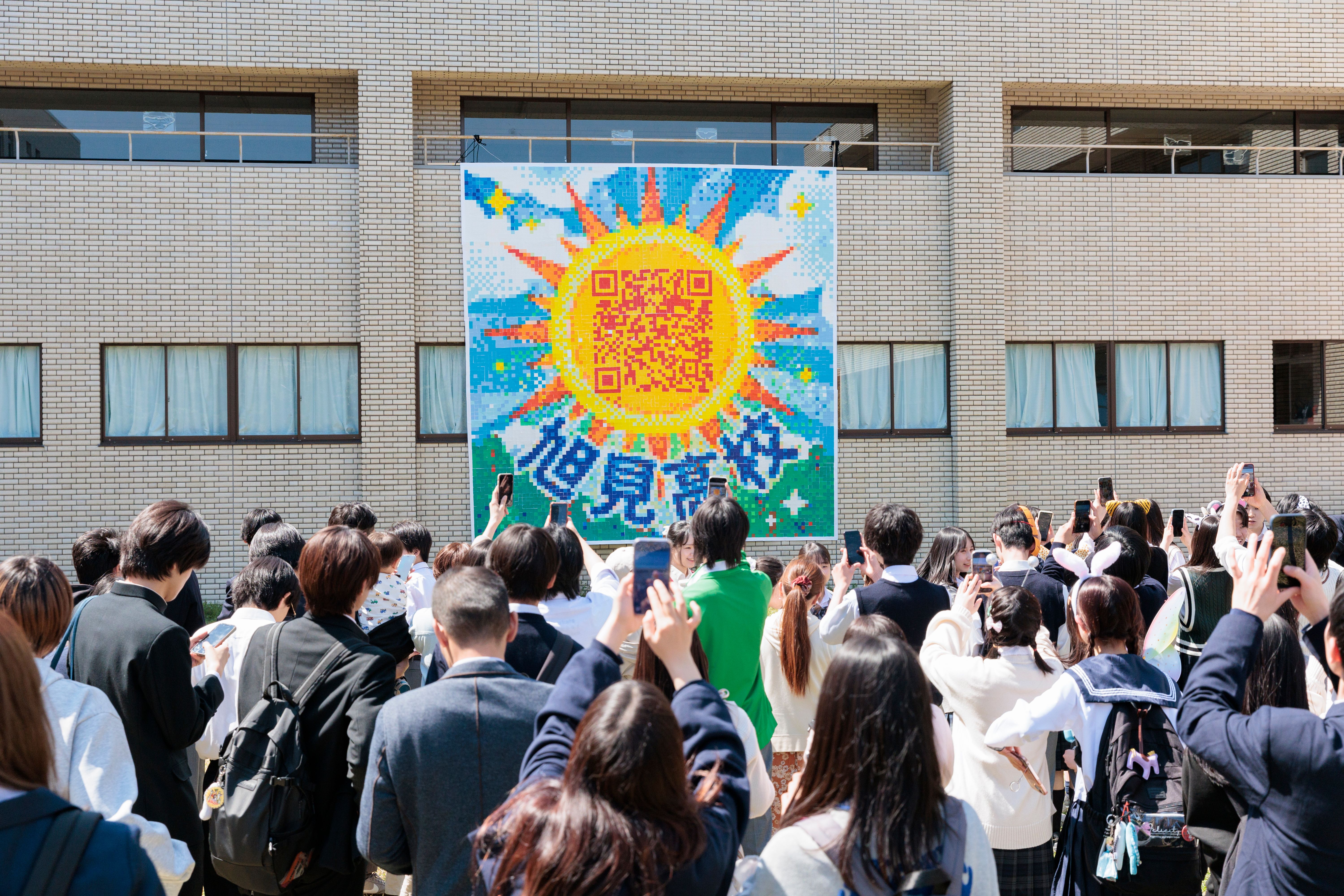
Eventually we arrived at the giant QR code mosaic instead.
It worked dramatically, fit naturally into the story, and even became a small interactive Easter egg that viewers could enjoy themselves.
Looking Up at the Same Star Beneath a Setting Sun
Music was another essential part of bringing this series to life.
Composer Isao Yoshida joined the project from its earliest concept stage, and I was incredibly grateful that he agreed to let us use "Onaji Hoshi" ("The Same Star") by Jungle Smile—one of my all-time favorite songs—as the series' theme song.
On top of that, he composed four original songs exclusively for the series. Every one of them is a masterpiece.
Sunrise. Sunset. Stars.
Together, these recurring motifs quietly connect the title, the music, and the story into one cohesive world. The soundtrack became the emotional thread running through the series, giving it a unique atmosphere that wouldn't have existed otherwise.
Inspired by Mr. Robot
The idea of making a "tutorial drama" was actually inspired by the TV series Mr. Robot.
It's a show about hackers, but instead of relying on flashy Hollywood interfaces—with glowing 3D maps flying across the screen and giant "HACKING COMPLETE" animations—it shows real computer terminals supervised by actual security experts.
If you think about it, watching someone stare at a terminal full of text should be incredibly boring.
Yet Mr. Robot somehow makes it fascinating.
That made me wonder:
"Could we do the same thing with Canva?"
That question became the starting point for this entire series.
Mr. Robot is also filled with Easter eggs and hidden details that reward attentive viewers, so naturally I wanted to do the same—QR codes, subtle callbacks to Season 1, and little visual details that become more rewarding the second time you watch.
Handmade, Just Like the Story
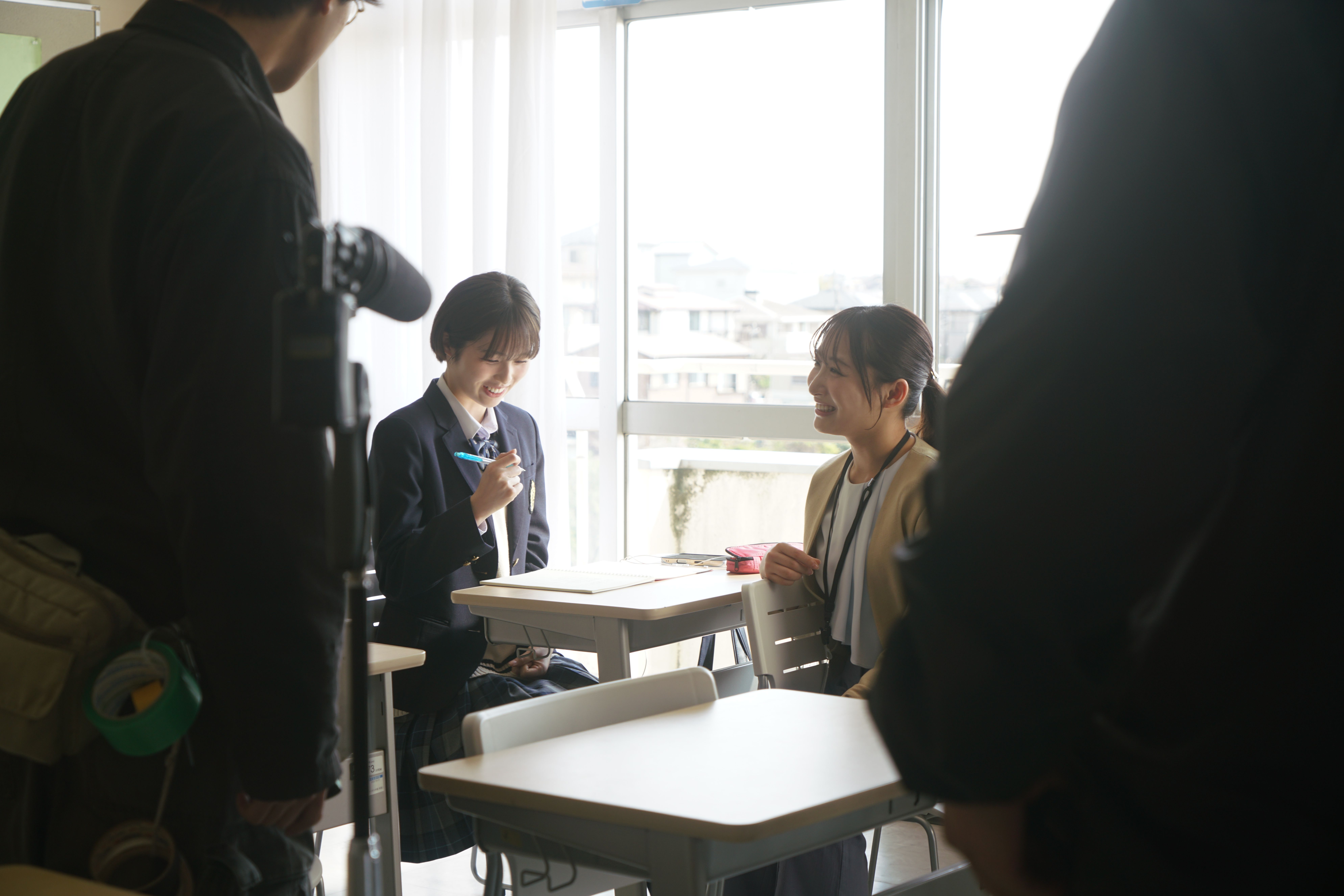
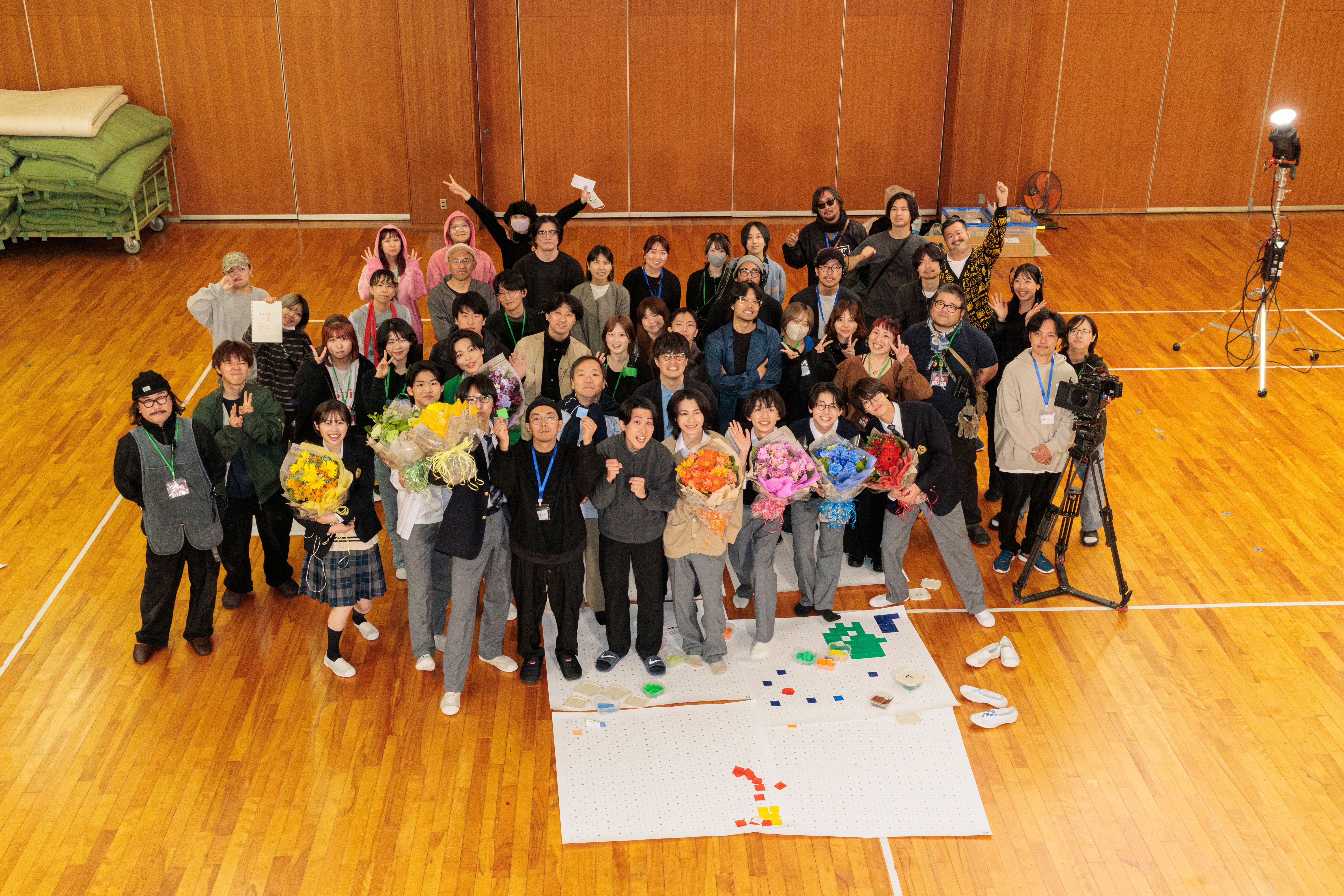
Filming took place over roughly two weeks in March 2026 at a high school in Chiba Prefecture.
Since it was a little too far to commute every day, I stayed at a hotel one station away and traveled to the set each morning by train before walking to the school.
Around the same time every day, I'd find myself walking alongside the actors playing students as they headed toward the set.
For a couple of weeks, it genuinely felt like I was commuting to high school again.
By the time I arrived, the cast and crew had usually been there for quite a while already, preparing everything before filming began.
Since I was responsible for directing the Canva interface sequences, seeing everyone's dedication reminded me every morning that I couldn't afford to make mistakes either.
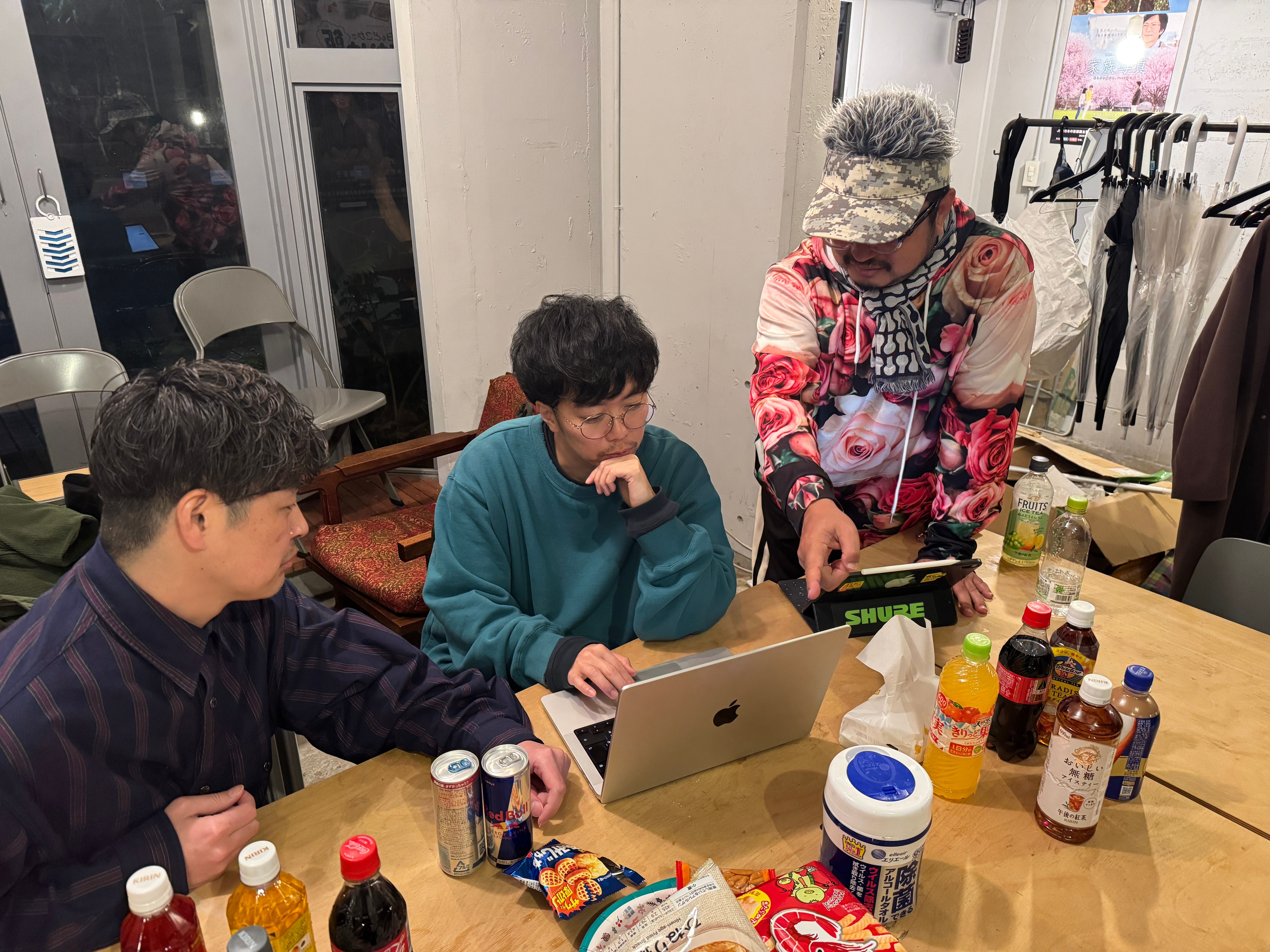
During production, our stylist suggested giving everyone disposable film cameras and letting the cast photograph whatever they wanted throughout the shoot.
Many of those photos ended up appearing in the ending credits.
Some are slightly out of focus.
Some are poorly framed.
Some simply didn't turn out the way anyone expected.
And somehow, that's exactly what makes them beautiful.
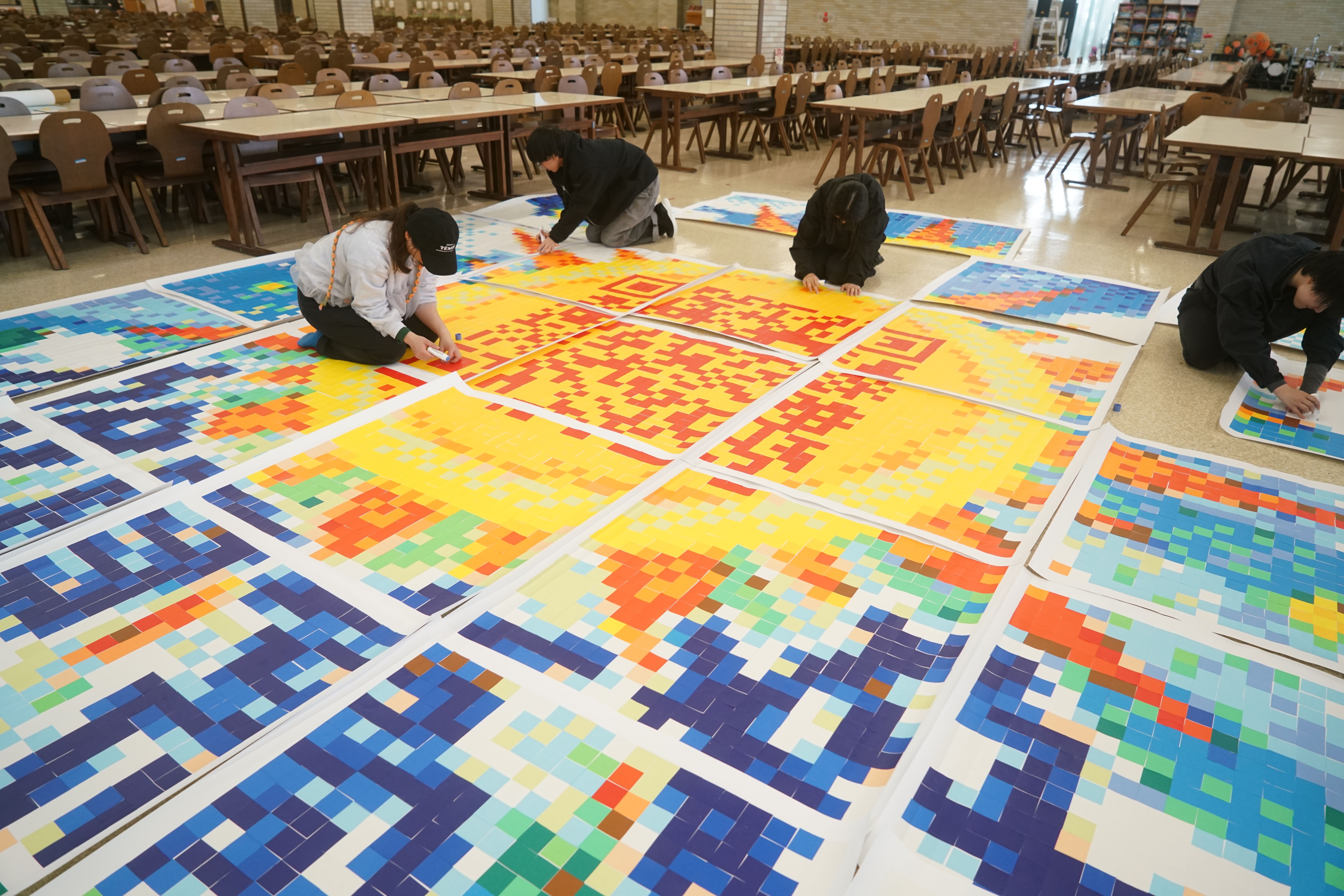
We also created the giant mosaic artwork seen in the finale entirely by hand, attaching thousands of individual colored paper squares one by one for the shoot.
There were certainly easier ways to do it digitally. But because the theme of this season was "It doesn't have to be perfect," it felt important to build a real, imperfect piece rather than simulate one on a computer.
The finished mosaic became more than just a prop for the climax—it quietly embodied the message we wanted to leave with the audience.
Not Just Releasing It, But Sharing It
Creating the series was only half of the project. Equally important was how we introduced it to the audience.
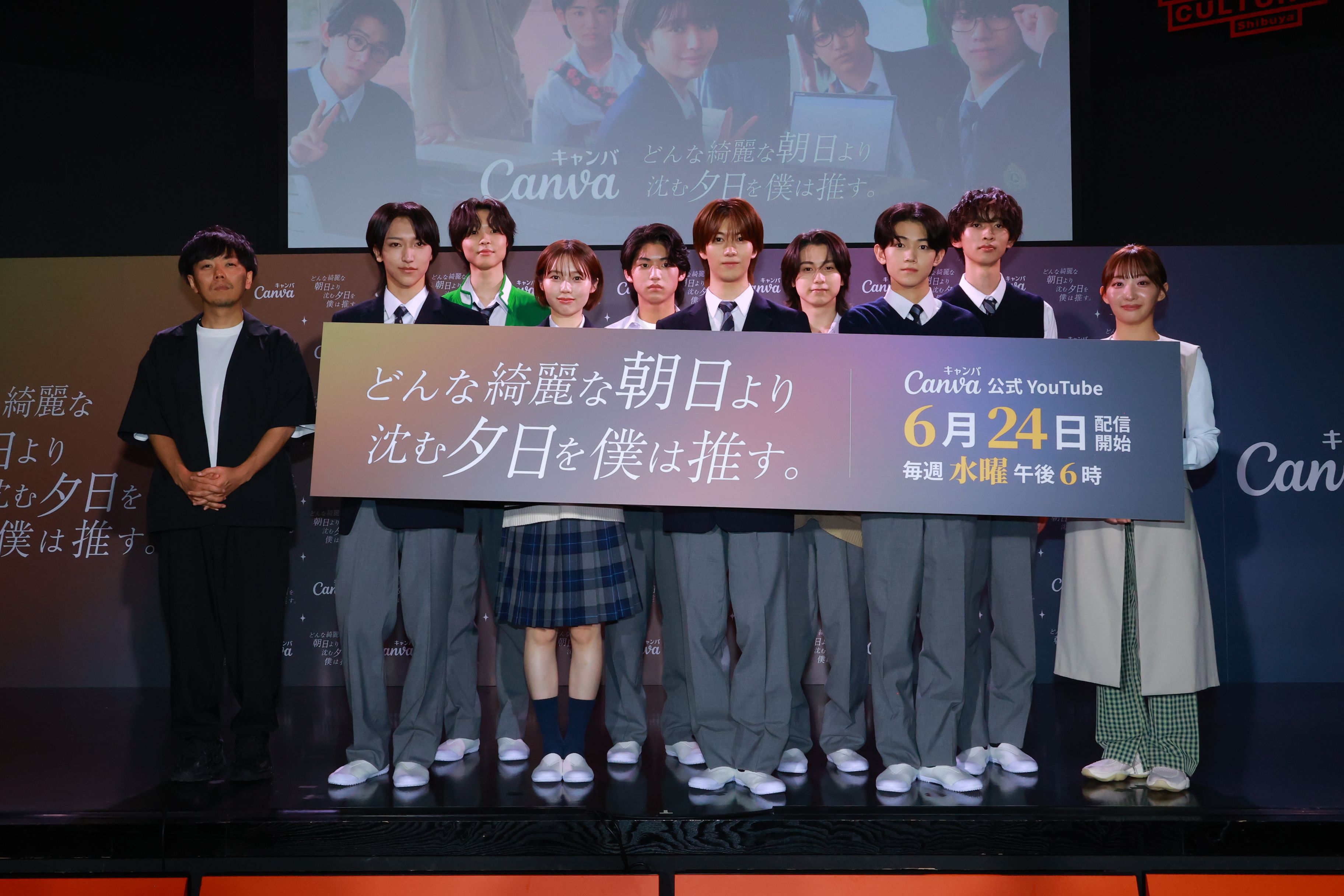
About a month before the premiere, we officially announced the project and held a press conference with the cast. We also produced individual trailers for all six episodes, gradually building anticipation as each new chapter approached.
Rather than treating the drama as six standalone videos, we designed the entire campaign—including YouTube and social media—as one continuous experience, hoping viewers would genuinely look forward to the next episode each week.
I'm Doing Great in the Shopping Street Today
Another thing I cared deeply about was preserving the connection to the first season.
Although the setting moves from the shopping street to a high school, Sakura is still enthusiastically introducing people to Canva wherever she goes.
Watching that word-of-mouth enthusiasm spread from the local community into the school reminds me very much of the real Canva community.
Even Ken's brief appearance became an important piece leading into the final concert, and I loved seeing the universe gradually expand through these returning characters.
Looking Back
Looking back now, it's amazing how many different elements found their way into this project: a school drama, music, fan culture, a crossover with the first season, Canva tutorials, a cultural festival, Easter eggs...
And somehow, despite all of that, it still came together as one complete coming-of-age story.
That's probably still my favorite thing about the series.
Finally, my heartfelt thanks go to everyone who helped bring this project to life—the incredible cast, the dedicated crew, and everyone who supported the series along the way.
Gallery
01 / 05
YouTube
Role
- Creative Direction
- Executive Production
- Series Planning
- Plot Writing
- Casting
- Marketing Strategy